My Mother Found a Bus. We Found a Zip Code.
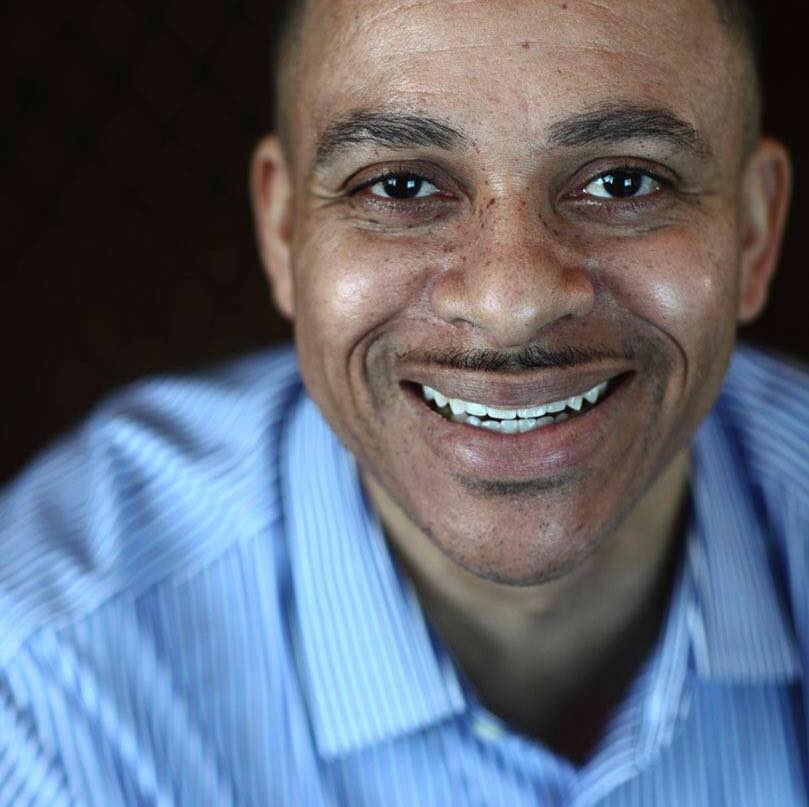
In 1983, my mother sent me across Los Angeles County in search of a better education. Decades later, my wife and I moved for much the same reason. Becoming a parent has made me see her choice — and the inequality that made it necessary — differently.
Who might I have become if my mother had made a different decision about my education?
That’s the question that lingered in my mind after reading the 8,300-word essay Nikole Hannah-Jones wrote last week for The New York Times Magazine. In it, she reflects on the decision she and her husband made a decade ago to enroll their daughter, Najya, in a high-poverty, majority-Black New York City public school rather than pursue more diverse and economically advantaged magnet or gifted-and-talented programs—or a largely white private school.
Hannah-Jones and her husband believed it would be morally inconsistent to condemn a segregated school system that disadvantaged other people’s children while using their own privilege to shield their daughter from that same system. Najya, now 16, believes her parents made the wrong choice—a tension captured in the essay’s title, “In Fighting for Every Black Child, Did I Betray My Own?”
In 1983, my mother, Sherry, faced a version of the same dilemma. And she made almost precisely the opposite calculation.
Wheels of Fortune
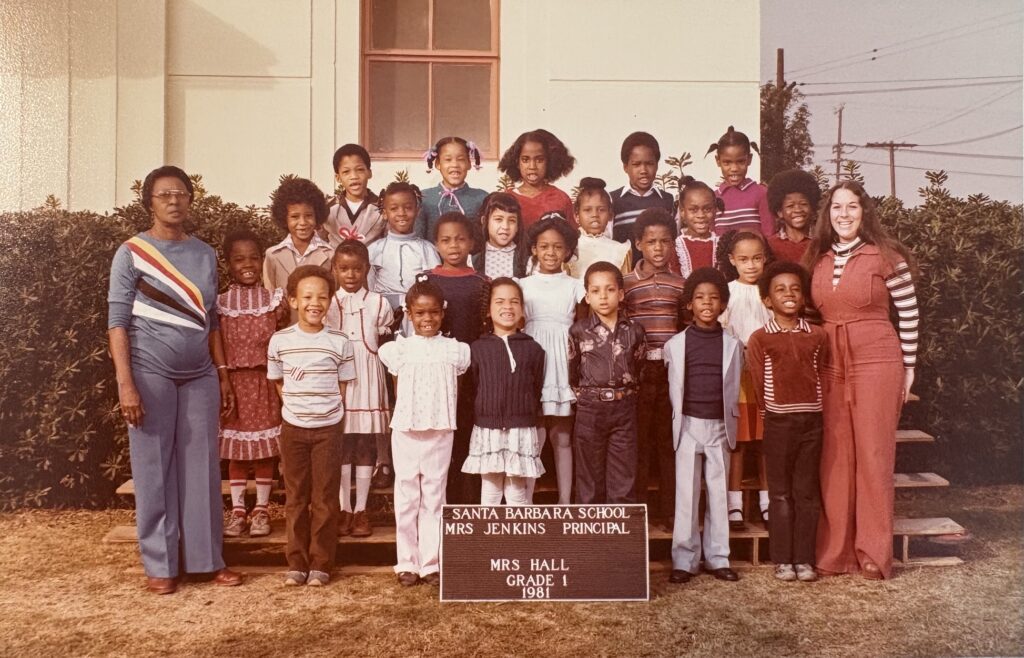
I was eight years old and a second-grader at Santa Barbara Elementary School, now Martin Luther King Jr. Elementary, in the Los Angeles neighborhood of Exposition Park. After one visit to the principal’s office on trumped up charges of aggressive roughhousing thanks to a schoolyard game of tag gone awry, my mother was convinced I needed a different school environment.
So when she learned about a voluntary Los Angeles Unified School District (LAUSD) program that would transport Black children from South Central Los Angeles to then predominantly white schools in the San Fernando Valley, she signed me up.
She wasn’t trying to get me into Stanford University. She simply wanted me to get the best education within her reach.
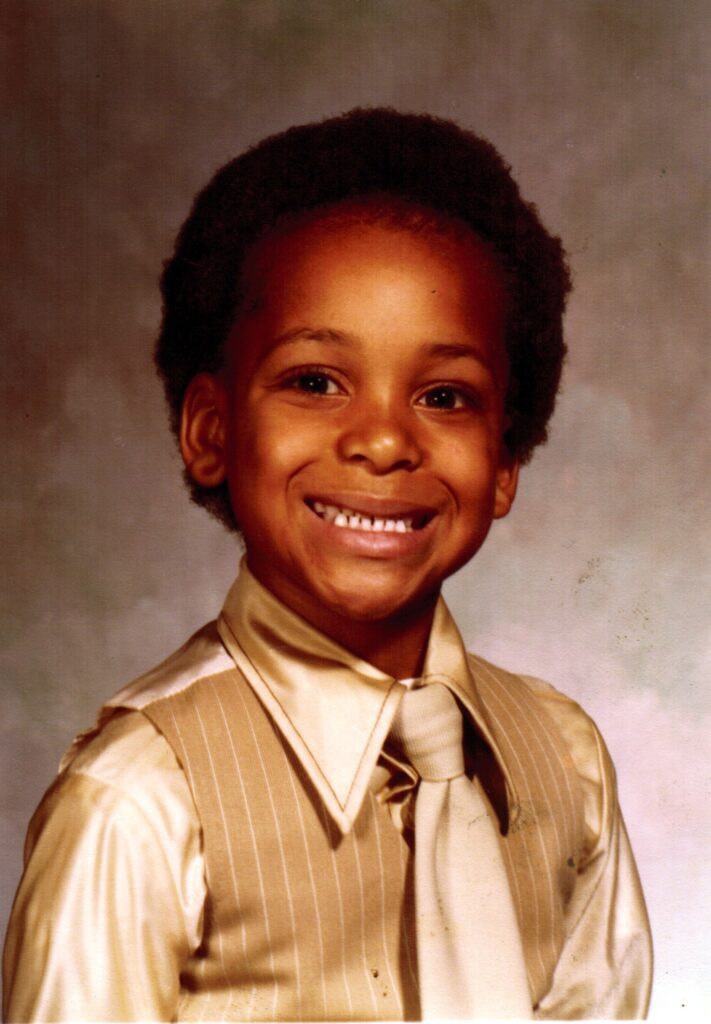
Beginning in third grade, I started leaving my neighborhood each morning by bus.
Seventeen years later, as a young reporter at the Los Angeles Times, I retraced that journey for an article titled “Wheels of Fortune.”
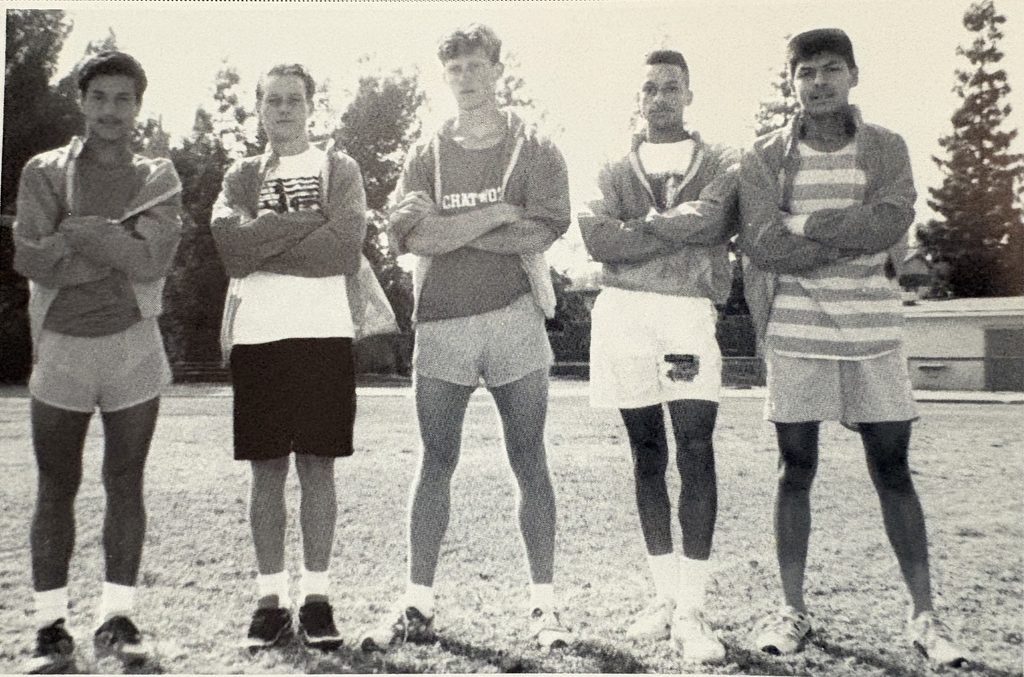
At 6:23 one morning in 2000, I climbed aboard bus No. 4067 at Slauson and 4th avenues with about 40 teenagers headed for Chatsworth High School—the same school from which I had graduated eight years earlier.
For 10 years, a 45-minute commute each way to school via bus had been part of my life. I attended Beckford Elementary, Nobel Junior High and Chatsworth High. By junior high, I was taking honors classes. At Chatsworth, I took Advanced Placement courses and was labeled a “senior standout” because I was doing all the things—student council, varsity track and field, peer college counselor, Black Awareness Club.
In 1992, I graduated and headed to Stanford, a school that wasn’t even on my college bingo card.
My mother’s assessment when I interviewed her eight years later consisted of two words: “It worked.”
At 25, I agreed. I ended “Wheels of Fortune” by writing that although navigating two worlds hadn’t always been easy, my mother had made the right decision.
“I’d do it all over again,” I wrote.
Twenty-six years later, I wonder: Could I?
Different Mechanism
The answer surprised me. The busing program still exists.
Permits With Transportation, or PWT, remains one of LAUSD’s integration programs. But the PWT of my childhood has almost vanished.
At its peak in 1984, the year after I began riding the bus, about 23,000 students participated. By 2000, enrollment had fallen to about 6,000. Today, LAUSD says it transports approximately 140 PWT students.
Not 14,000. Not 1,400. One hundred and forty.
The program now sends eligible students to just three receiving schools: Portola Middle School in Tarzana, Paul Revere Middle School in the Brentwood/Pacific Palisades area, and Taft High School in Woodland Hills. Chatsworth isn’t one of them. Neither are Beckford and Nobel.
The educational route that shaped my childhood has effectively disappeared.
LAUSD didn’t abandon integration. It changed the mechanism.
When I wrote my original article, about 46,000 students attended magnets, compared with roughly 6,000 in voluntary busing. Today, LAUSD operates more than 330 magnet programs serving nearly 81,000 students. About 27,000 magnet students receive transportation.
Families can also pursue charters, Schools for Advanced Studies, dual-language programs, early-college options and other programs.
There are far more choices. But choice now requires knowing how to choose.
My mother’s choice came with a school bus.

A Different Los Angeles
LAUSD itself has been transformed.
When I wrote “Wheels of Fortune” in 2000, the district enrolled about 723,000 students and was bursting at the seams. Some 220 overcrowded campuses operated on multitrack calendars because there wasn’t enough room for all the children.
The traditional district-school population has fallen roughly in half.
The racial landscape has changed, too. LAUSD is now 72 percent Latino, 10 percent white, 7 percent Black and 4 percent Asian.
The old racial geography upon which voluntary busing was built—Black South Los Angeles on one end, predominantly white San Fernando Valley schools on the other—doesn’t exist in the same form anymore.
There has also been real academic progress. LAUSD reported its highest-ever performance in reading, math and science on California’s 2025 assessments. Its four-year graduation rate reached 87 percent in 2023-24, and 56 percent of graduates completed the college-preparatory courses (known as the A-G requirements) needed for admission to California’s public universities.
But disparities remain. A-G completion was 50 percent among Black students and 54 percent among Latino students.
A 2025 study by UCLA’s Civil Rights Project suggests that my childhood experience belongs to a much larger story. The researchers found that California’s Black and Latino students remain much more likely than white and Asian students to attend schools with concentrated poverty. They also found that the most heavily segregated Black and Latino schools had lower graduation and A-G completion rates and offered students less access to advanced coursework than the most heavily white and Asian schools.
The geography of educational opportunity has changed since I was a child, but it hasn’t disappeared.
And individual schools can still look remarkably different. At Beckford, the elementary school I attended in the Valley, nearly 85 percent of tested students met or exceeded California’s English-language-arts standard in 2025 and about 81 percent did so in math.
Test scores aren’t destiny. They tell us something about a school, but not everything.
Still, the numbers brought me back to something I wrote at 25:
“I questioned why I had to leave my own neighborhood—why they couldn’t fix the schools where I lived.”
The Boy Who Stayed Behind
As I researched all this, I started thinking about another kid—me.
Not the boy who boarded the bus in 1983, but the one who didn’t.
Call him Alternate-Universe Johnathon.
For years, I carried a simplified version of what would have happened to him: He wouldn’t have taken honors classes. He wouldn’t have taken AP courses. He wouldn’t have gone to a college like Stanford.
The more I researched my old neighborhood schools, the less certain I became.
There were good teachers, gifted students, and academic programs there. There was a path.
Alternate Johnathon could have gone to Stanford. It was possible.
The school bus didn’t give me intelligence. The Valley didn’t give me curiosity. White classmates didn’t give me the ability to write.
And I don’t want to tell a story in which a Black kid from South Central Los Angeles had to be rescued from Black schools in order to succeed.
Maybe Alternate Johnathon finds a remarkable English teacher. Maybe a counselor recognizes something in him. Maybe he discovers journalism and applies to Stanford anyway.
But there is also another plausible version.
The second-grader who keeps landing in the principal’s office isn’t recognized as a kid who needs greater academic challenge. He gets labeled troublesome instead of bright. Nobody steers him into the right classes. Nobody tells him Stanford is realistic.
And because nobody tells him the way my high school counselor at Chatsworth, Anne Clark, told me, he never thinks to apply.
I can’t know which boy I would have become. That’s the point.
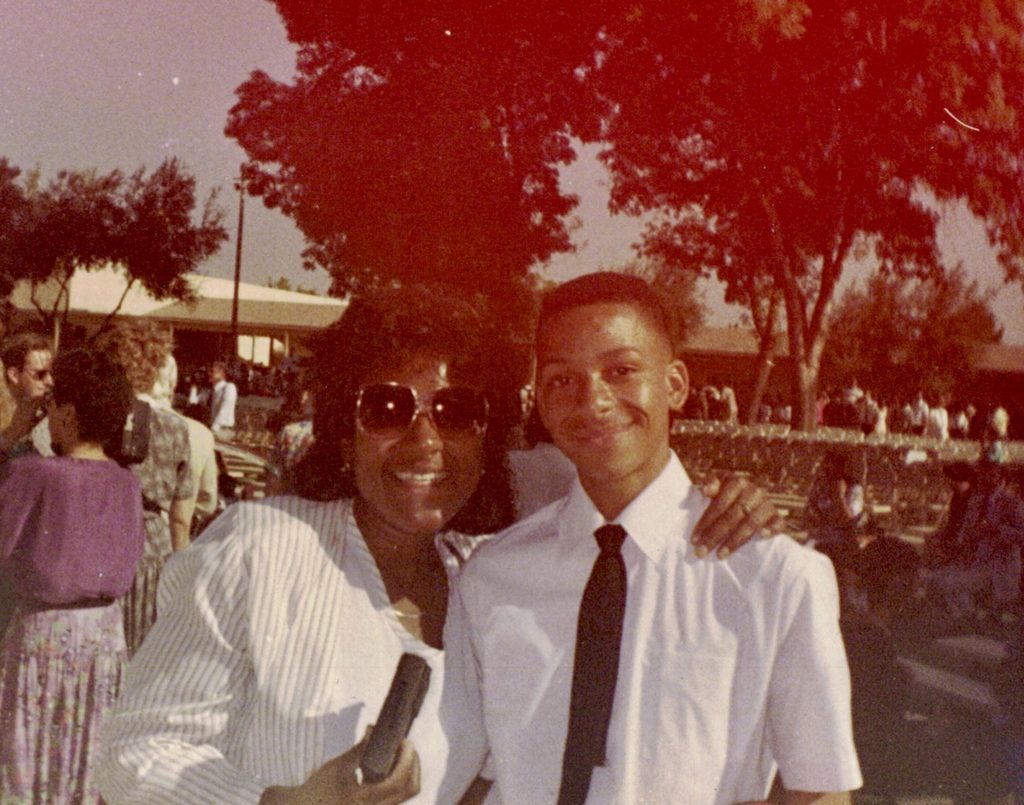
But there is a third version of me I rarely think about: the boy who grew up in a Los Angeles where my mother never had to make that choice at all.
What if the school down the street had offered the same academic rigor, experienced teachers, advanced courses, safety and expectations that my mother desired for me—and for all the neighborhood children? Who might I have become if opportunity hadn’t required a 32-mile bus ride? Who might we have blossomed into being?
Maybe I still would have gone to Stanford. Maybe not.
But I might have grown up with something neither of my other selves had: the ability to receive an excellent education without leaving my own community to find it. I could have kept the neighborhood friendships that faded as my worlds separated. I might have learned earlier that academic excellence and Black community were not competing experiences—that I didn’t have to travel from one world into another every morning to have both.
Perhaps the greatest opportunity an equitable school system could have given me wasn’t a different destination at all. It was the freedom to become myself without having to travel across Los Angeles County each morning to find the opportunities that should have existed down the street.
That, more than the bus itself, is what I understand differently now. The problem wasn’t necessarily where I lived. It was the unequal distribution of opportunity between the schools available to children who lived in different parts of the same school district.
“For years, I understood my mother’s decision primarily in geographic terms. She sent me out of South Central and into the Valley. I see it differently now. What she really did was refuse to accept the educational default assigned to me.”
Changing the Odds
For years, I understood my mother’s decision primarily in geographic terms. She sent me out of South Central and into the Valley.
I see it differently now. What she really did was refuse to accept the educational default assigned to me.
PWT didn’t make Stanford possible. As I’ve come to realize, Stanford may have been possible from my neighborhood schools, too.
What my mother changed was the probability that I would find my way there.
At Beckford, I entered an environment that placed me on a strong academic track early. At Nobel, honors classes became normal. At Chatsworth, AP courses and college preparation became part of my pathway. Along the way, I encountered academically ambitious students from different racial and socioeconomic backgrounds and learned to navigate institutions filled with people whose lives could be very different from mine.
And I accumulated something harder to measure: years of evidence that I belonged in academically demanding spaces.
By the time Stanford appeared on the horizon, it didn’t feel like an impossible leap from one world into another. It felt like another step.
That’s what I mean when I say my mother changed the odds.
She couldn’t have known where that bus would eventually take me. She couldn’t have known that the second-grader she put on it would one day end up at Stanford. She didn’t need to.
She reduced the number of things that had to go right for me to discover how far I could go.
Perhaps that’s the greatest gift her decision gave me. She didn’t determine my destination. She increased the odds that whatever my potential turned out to be, I would have the opportunity to discover it.
Then I Became a Parent
This is where Hannah-Jones’s essay comes full circle for me. It’s one thing to analyze the educational choice your mother made for you. It’s another to examine the choices you’ve made for your own child.
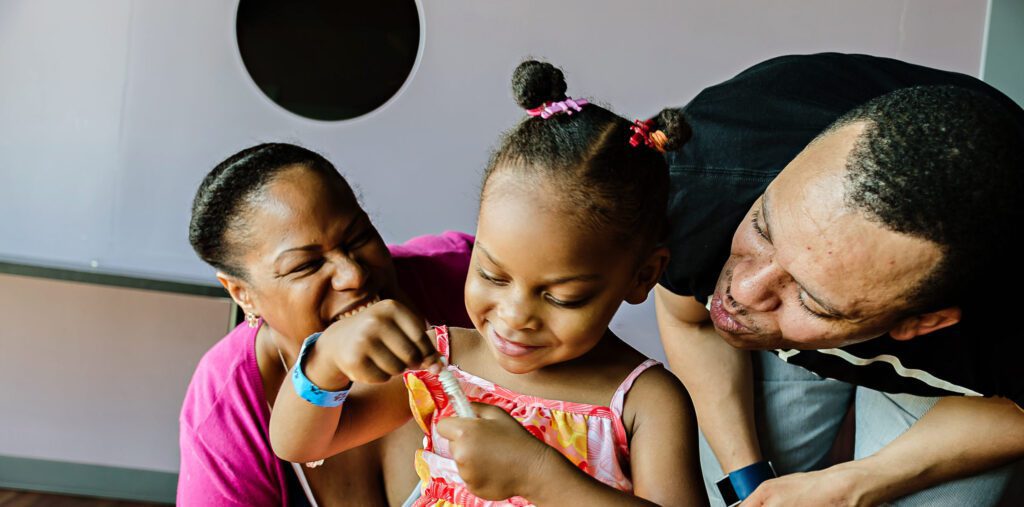
My wife and I have a 12-year-old daughter, now a seventh-grader in public school. She was born on the South Side of Chicago when we lived in the South Shore neighborhood, where my wife grew up.
Before our daughter’s first birthday, we were thinking about moving out of the city.
Chicago Public Schools weren’t the only reason. We wanted more space, and the combination of property taxes and condominium association fees made suburban homeownership increasingly attractive.
But education absolutely figured into our decision, especially given my wife’s own disappointing experiences as a CPS student.
Had we stayed in Chicago, we assumed we would eventually be navigating magnet schools, selective enrollment or perhaps private school in search of the education we wanted for her.
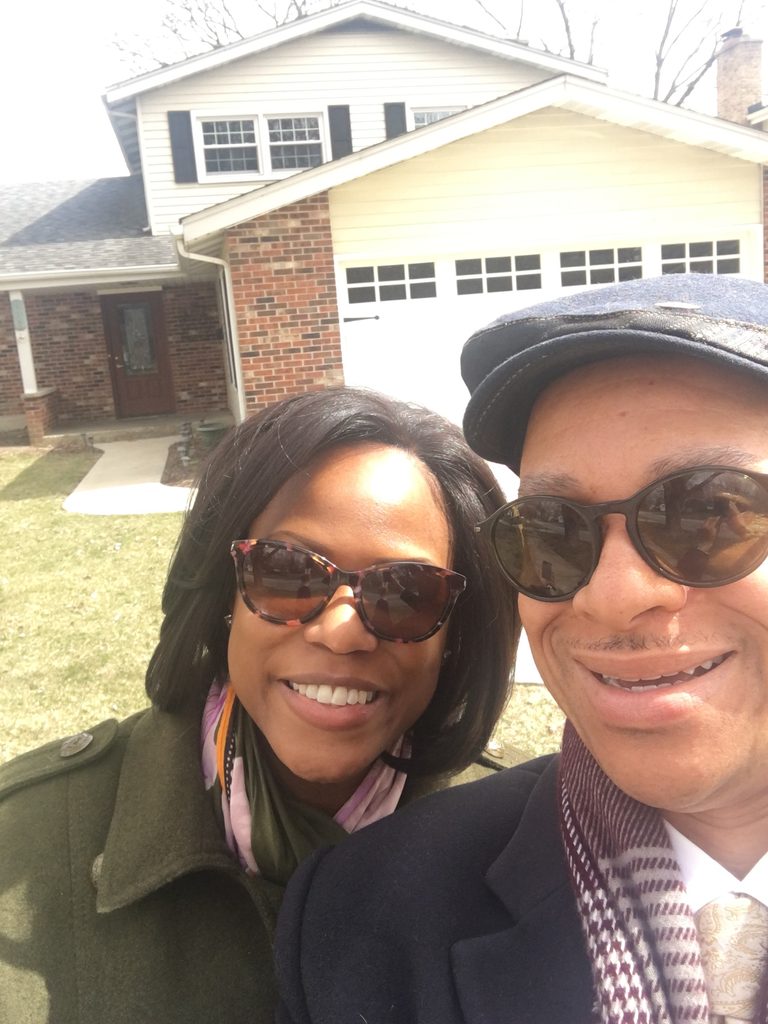
Instead, in 2014, we moved to Naperville—consistently named as one of America’s best cities to live in— and eventually bought a home within the boundaries of its high-performing School District 203.
My mother stayed put and moved the child. We moved the family.
Three years later, shortly before her 3rd birthday, our daughter was diagnosed with autism.
Suddenly, “Is this a good school?” became a much more complicated question.
We weren’t only thinking about academics. We were learning about individualized education programs, speech and language services, occupational therapy, social-emotional supports, accommodations and sensory needs.
District 203 provides a continuum of special-education services, with most students receiving special education served in their neighborhood schools.
At 12, our daughter’s needs aren’t necessarily the ones we worried about when she was three.
That’s one of the lessons autism has taught me: You aren’t choosing an educational destination so much as trying to preserve pathways.
You don’t know exactly what your child will need five years from now. You don’t know which strengths will emerge or which challenges adolescence will bring. You want to keep as many doors open as possible.
Sound familiar?
Residential Mobility
Only later did I fully appreciate the privilege embedded in the way my wife and I accomplished that.
My mother didn’t buy a house in the San Fernando Valley to get me into its schools. She didn’t have to. The public school system sent a bus into our neighborhood.
But my wife and I had access to something different: residential mobility.
We could look at the schools where we lived and decide to live somewhere else.
That’s one of the uncomfortable truths about American public education. We call schools a public good, but access to particular public schools is often bundled into the price of housing. Public schools are funded in part through local property taxes, and where you live often determines where your child goes to school. That means families with the means to buy into certain neighborhoods can also buy access to the public schools attached to them. The tuition isn’t listed on a bill. It’s embedded, in part, in the price of the house and the property taxes that come with it.
Families with sufficient income, credit, employment flexibility and information can buy into a different educational ecosystem simply by changing addresses. Families without those resources cannot.
Our daughter’s autism diagnosis made me appreciate that advantage even more.
Had we remained in Chicago, she still would have been legally entitled to special education. Many children with disabilities receive excellent support from dedicated CPS teachers, therapists and case managers.
But she was diagnosed in 2017, during the period that led the Illinois State Board of Education to investigate CPS special-education practices. The resulting corrective-action process addressed students who may have experienced delays or denials of services during the 2016-17 and 2017-18 school years.
That doesn’t mean our daughter would have been denied services. Maybe we would have found exactly the right CPS school and team. I’ll never know.
But in Naperville, we had settled one question before we knew we would need to ask the others: Our neighborhood public schools were schools we wanted our daughter to attend.
I understand this, too, is a form of privilege. My mother found an educational opportunity for me that didn’t require us to move. My wife and I had the means to move our family to where we believed those opportunities would be available to our daughter. Not every parent has either option.
And that’s what keeps me from turning either my childhood or my daughter’s into a tidy story about parents making “good choices.” A choice is meaningful only when families have choices they can realistically exercise.
26 Years Later
Information, time, transportation, housing and the knowledge to navigate the system are all forms of educational advantage. When access to opportunity depends on those advantages, inequality can persist even within a system built around choice.
At 25, I thought my mother put me on a bus to a better school. At 52, I see it differently. She changed the odds.
More than four decades later, parents are still making versions of that decision.
Los Angeles has changed. LAUSD is smaller. The Valley is more diverse. Magnets and charters have largely replaced voluntary busing as mechanisms of school choice.
My mother found a bus. My wife and I found a ZIP code. Different choices, in different cities and different eras, but both expanded the educational opportunities available to our children.
But what about the child whose parents can find neither?
That’s the question I couldn’t see when I wrote “Wheels of Fortune” at 25.
The deepest problem wasn’t that some parents found ways around educational inequality. It was that inequality made those workarounds necessary in the first place.
Public education shouldn’t require parents to become experts at engineering their children’s circumstances. The goal shouldn’t be to make sure every determined parent knows how to find the right bus, magnet, charter school, gifted program—or house in the right school district.
It should be to make the question my mother asked in 1983 unnecessary:
Where do I have to send my child so he has the chance to become who he is capable of becoming?