“They Call Me Dad” Explores Dimensions of Black Fatherhood
— February 28, 2021 —
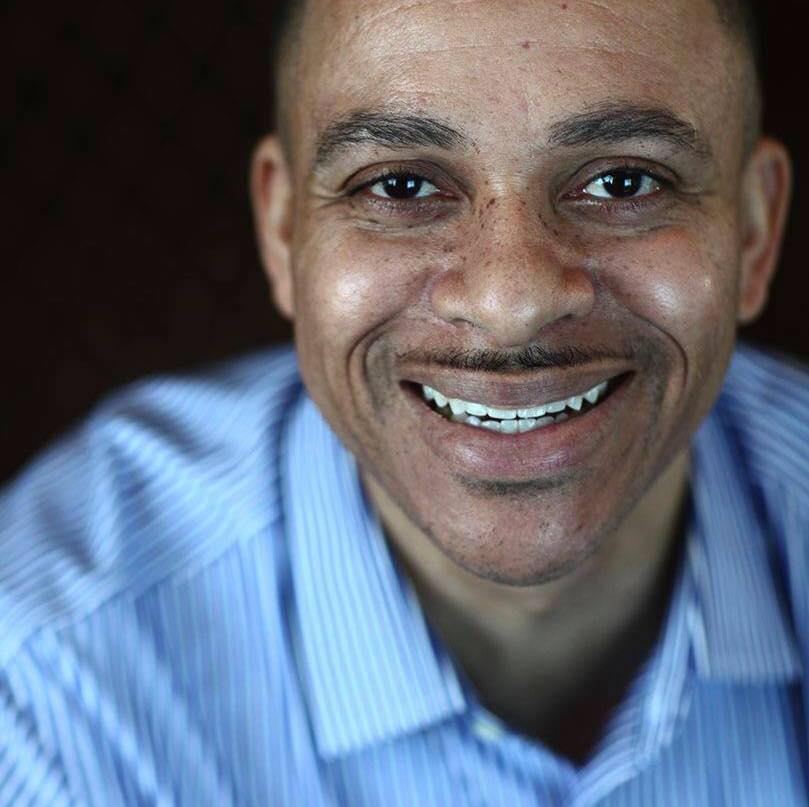
[dropcap]S[/dropcap]eeing yourself on television, with your family, during Black History Month, on a network created by Oprah Winfrey is surreal—even for a public relations professional like me accustomed to the cameras that come with publicity.
Last week my wife and I sank into the comfort of our living room sofa, clicked over to the Oprah Winfrey Network (OWN), and watched the season premiere of “OWN Spotlight: They Call Me Dad,” a one-hour special that profiles Black fathers as they as they navigate the joys and fears that come with fatherhood.
There I was at the 36-minute mark, clad in a shawl collar sweater, speaking directly to the camera about my journey as a father raising an autistic daughter, my words punctuated by cherished family photos and home movie footage.
The stories presented in “They Call Me Dad” matter because they shift the narrative on Black fatherhood which has long been distorted in media.
The three-minute vignette was one of several showcased between achingly compelling stories of four celebrity dads that explored the dimensions of Black fatherhood: chef G. Garvin; actor Glynn Turman; rapper Tobe Nwigwe; and journalist/activist Bakari Sellers.
I’d been invited to participate in the series last December, but hadn’t received a sneak peek ahead of the Feb. 23 premiere. I was just as surprised as my friends were by the beautifully produced segment about my family which resulted from a two-hour interview.
My wife and I got a little choked up. On Facebook a friend exclaimed, “It was so heartwarming…What a wonderful thing to see the beauty, joy and pride of Black fatherhood illuminated!” On Instagram, autism advocate and author Florence Bracy commented, “Great interview. Thanks for putting a new face to autism.”
I am not by any stretch of the imagination a poster child for Black families affected by autism, but have shared my story to encourage acceptance and used my voice to encourage parents to have their children screened for autism early and seek a diagnosis if needed. That’s because I truly believe early intervention works.
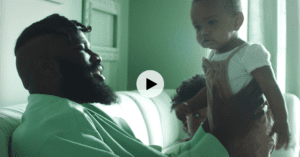
Florence’s remark, however, lingers in my mind because it echoes an observation I made about the Disney/Pixar film “Loop” which broke ground by placing an autistic girl of color at the center of a story:
“Too often in popular culture children on the spectrum are depicted as young white boys even though autism affects children in countries across the world. And while it’s true that in the U.S. boys are four times more likely to be diagnosed than girls…, [director Erica] Milsom’s decision to broaden the visual representation of who is affected by autism is a breakthrough worthy of celebration.”
By including my story in this edition of “They Call Me Dad,” the show, executive produced by Oji Singletary and Critical Content, helps to normalize neurodiversity and expand the picture of what a family affected by autism looks like.
Representation matters.
It matters because it raises awareness and shows other families they are not alone.
It matters because it validates experiences and lifts aspirations.
But beyond autism, the stories presented in “They Call Me Dad” matter because they shift the narrative on Black fatherhood which has long been distorted in media, fueling negative perceptions about Black families that haunt the American mind. The latter has real-world effects as noted in a still-relevant 2011 study conducted by The Opportunity Agenda on the impact of media representations on the lives of Black men and boys.
In his 1952 novel “Invisible Man,” Ralph Ellison famously wrote: “I am invisible, understand, simply because people refuse to see me. Like the bodiless heads you see sometimes in circus sideshows, it is as though I have been surrounded by mirrors of hard, distorting glass. When they approach me they see only my surroundings, themselves, or figments of their imagination—indeed, everything and anything except me.”
That’s the power of “They Call Me Dad”: its ability to hold up a mirror that affirms the humanity of Black men.
Father on,
— Disclosure: This is an unsolicited review.
— Banner image courtesy of the Oprah Winfrey Network